Destinations
November 2, 2026
·

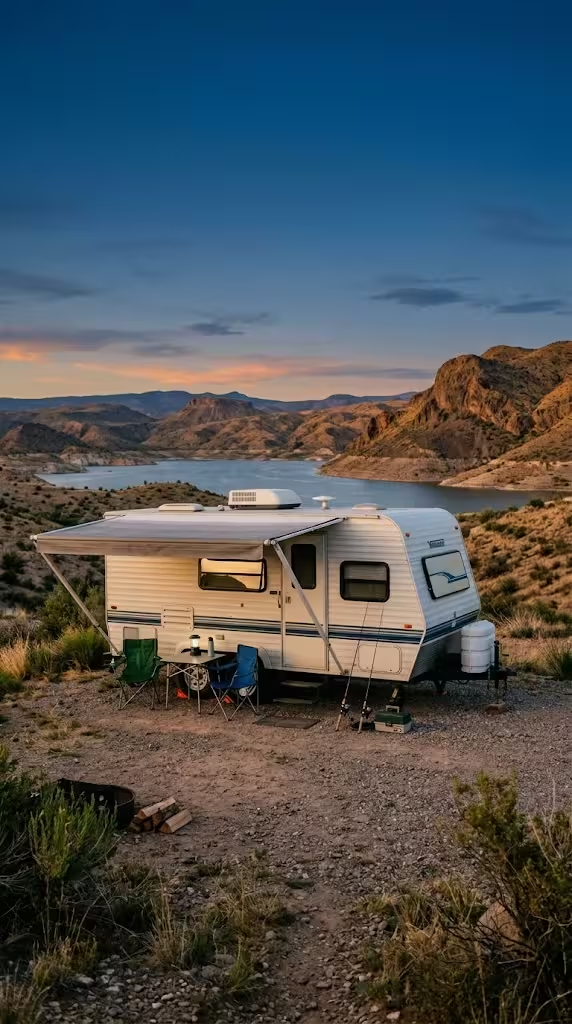
The Elephant Butte Lake water level has run historically low in recent seasons, and low water changes where you can launch a boat, how far you walk to the water, and which beaches make sense for a trailer. Beach camping is still open, but check three things before you book: the reservoir's current percent full, the ramp status on the New Mexico State Parks alerts page, and whether your chosen beach can be reached by a delivery truck right now.
This guide is for the family planning a few nights on the sand who keeps seeing low-water headlines. It explains how to read the numbers, what low water does to the shoreline, and how that affects a travel trailer delivered to the lake.
The fastest reliable check is the Elephant Butte Lake State Park page on the State Parks alerts site, which posts a Boating Conditions box with elevation, surface acres, volume and the open or closed status of each ramp. Bookmark these official places:
Reclamation calls its figures provisional, so treat any one day as a snapshot. The USGS gage named "Rio Grande Below Elephant Butte Dam" measures river flow leaving the dam, not the lake surface, so it is not the number you want for beach planning.
Each one measures something different, which is why two websites can describe the same lake with very different numbers.
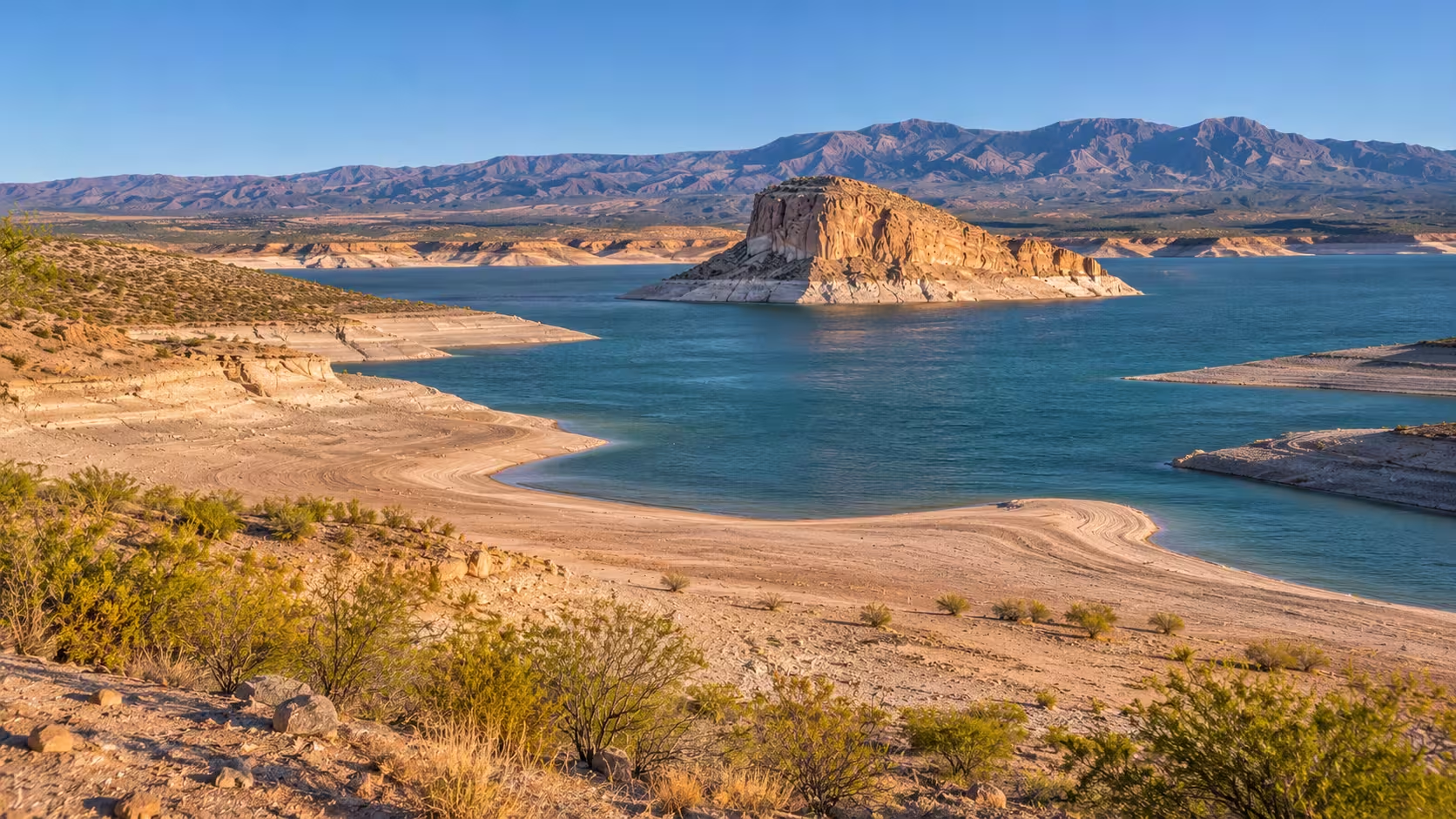
For a camper, elevation and its trend matter most, because they tell you whether the waterline is creeping toward the beaches or pulling away. As of October 5, 2026, per New Mexico State Parks, the reservoir was about 3.6 percent full and rising, having gained nearly 16 feet since late July. As of November 2, 2026, per the Texas Water Development Board's reservoir page, it was about 7.2 percent full.
Yes. State Parks lists beach camping and boat-in camping as primitive options at Elephant Butte, and its low-water updates have said the park remains open for camping and shoreline recreation where conditions allow. Primitive sites are defined by State Parks as undeveloped areas without water or electric connections, so plan to be self-contained on the sand.
What changes is the shoreline itself. State Parks has warned visitors to watch for unstable or soft shoreline zones and newly exposed debris. For a wider look at which beaches campers favor, see our guide to RV beach camping near Elephant Butte.
Low water mostly affects boating access first, then how far you walk from your campsite to swimmable water. Here is what to look for on the alerts page before you go:
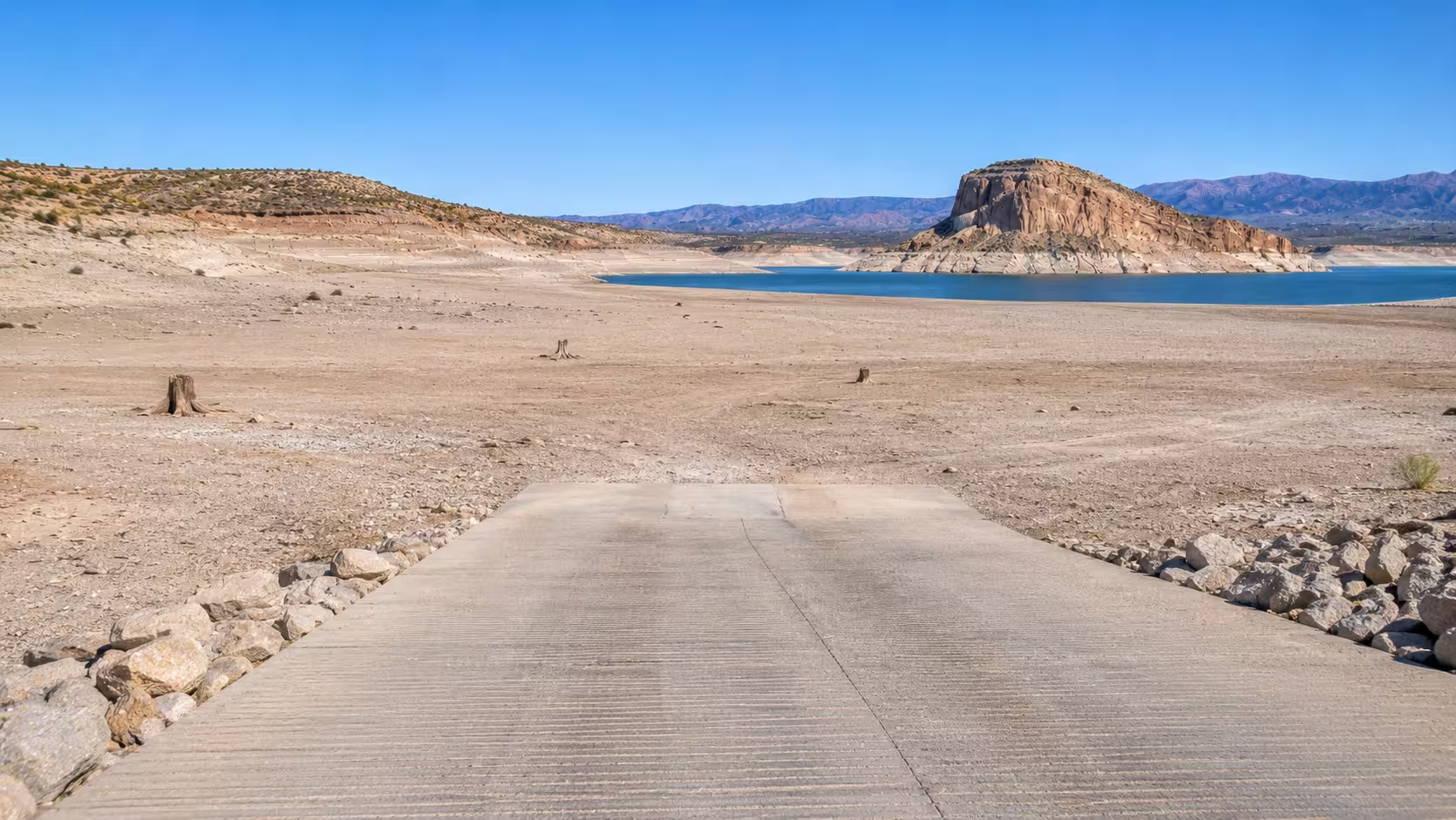
If you planned a houseboat or a boat-centered trip and the ramps are shut, our post on a trailer as a houseboat alternative covers a land-based version of the same lake week.
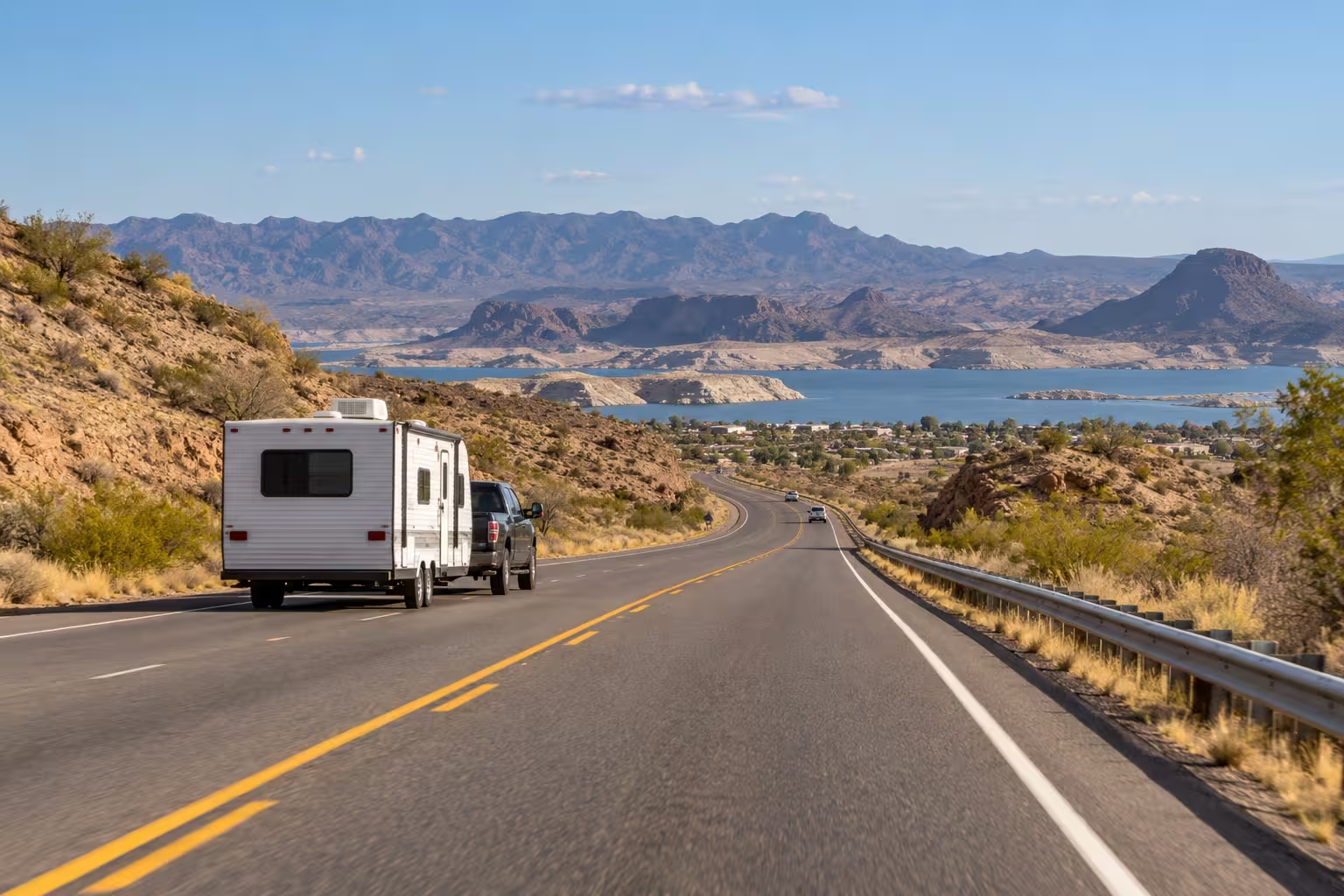
It mostly affects how close to the water your trailer can sit. We deliver and set up travel trailers at Monticello Point, Lions Beach and The Damsite, and we also deliver to Caballo Lake State Park and local RV parks in Truth or Consequences. Delivery cost may vary by site.
When the lake drops, the waterline moves but the drivable, authorized ground does not always follow it. Soft sand that looks dry can trap a heavy truck, so the exact spot on a beach depends on conditions that week. Tell the team which beach you want and ask how close they can place the trailer right now. If the water has pulled far from your favorite spot, the developed sites in the park or a stay at Caballo Lake may be the better call; check that park's own alerts too.
Two park rules matter for any trailer on the beach. A campsite cannot be left unoccupied for more than 24 hours without the superintendent's approval, and from October 1 through April 30 the rule allows up to 14 days within a 20-day period. State Parks has also announced temporary stay and fee changes during the low-water period, so recheck the current limits before a long stay.
On a primitive beach you trade hookups for space and a view, so pick a trailer by how many people need a real bed:
Every rental includes dishes and linens. The daily rate is not the whole trip cost, so ask the team for a full quote for your beach and dates. You can compare every unit on our rental prices page or start from the Elephant Butte RV rentals page.
Open the Elephant Butte page on the NM State Parks Park Alerts site and read the Boating Conditions box, which lists elevation, volume and the status of each ramp. For the federal numbers, use the Bureau of Reclamation's Elephant Butte Reservoir page.
They divide by different capacity figures and update on different days. Reclamation's project page cites 2,210,298 acre-feet of storage, while the Texas Water Development Board uses a conservation capacity of 1,985,900 acre-feet, so the same water can produce two percentages.
Usually, yes. State Parks notes that ramps can close while a lake stays open for recreation, and its Elephant Butte updates list shoreline activities and paddle craft as available. Watch for soft shoreline and exposed debris.
No. Metal detecting inside a New Mexico state park is prohibited without the superintendent's permission, so leave exposed objects where they are and tell a ranger about anything unusual.
Yes, for a day. State park rules say a campsite cannot sit unoccupied for more than 24 hours without the superintendent's approval, so a day trip to Truth or Consequences is fine but an overnight away is not.
Yes. State Parks posted that the Upper Ridge Road and Rock Canyon comfort stations close for the winter from October 1, 2026 through February 28, 2027, so check the alerts page for the current list before you pick a beach.
Tell us your beach, your dates and your group size, and we will tell you what is realistic at today's lake level. To ask about placement and a full quote, contact our Manager and the Elephant Butte RV Rentals Team. If your dates are set, View available RVs and hold a trailer while the beach is quiet.